A software company was posting like a software company. So the tenants stayed invisible.
Roomindo gives PG and hostel owners one app to replace the notebook. The rebuild in progress: stop selling features, start telling the truths the whole industry already knows and never says out loud.
Not a case study. A bet, placed in public, with the thinking already done.
Everything else in this portfolio is finished work with the results in. This is the opposite: a rebuild I took over roughly six weeks ago, shown while it's still early on purpose. What a brand looks like in its first forty-five days says more about how someone thinks than a polished retrospective does.
So read this page for the direction, not the reach. The audience is small today. The argument for why it won't stay small is the actual work.
The category sells software. The owner is losing sleep over the last ₹20,000.
Property-management SaaS almost always markets itself the same way: feature, feature, dashboard screenshot, book a demo. It talks to a buyer who has already decided they need software. That buyer is a fraction of the market.
The rest — the owner running twelve rooms from a paper notebook and a WhatsApp group — doesn't wake up wanting software. They wake up worried about a vacancy, a tenant three weeks late, the ₹20,000 that always turns into a fight. The product solves those things. The old content never mentioned them.
The shift: stop describing the app, start naming the daily reality of running a PG in India with uncomfortable honesty. Earn the owner's recognition first. The demo comes after they feel understood, not before.
What I built the brand around
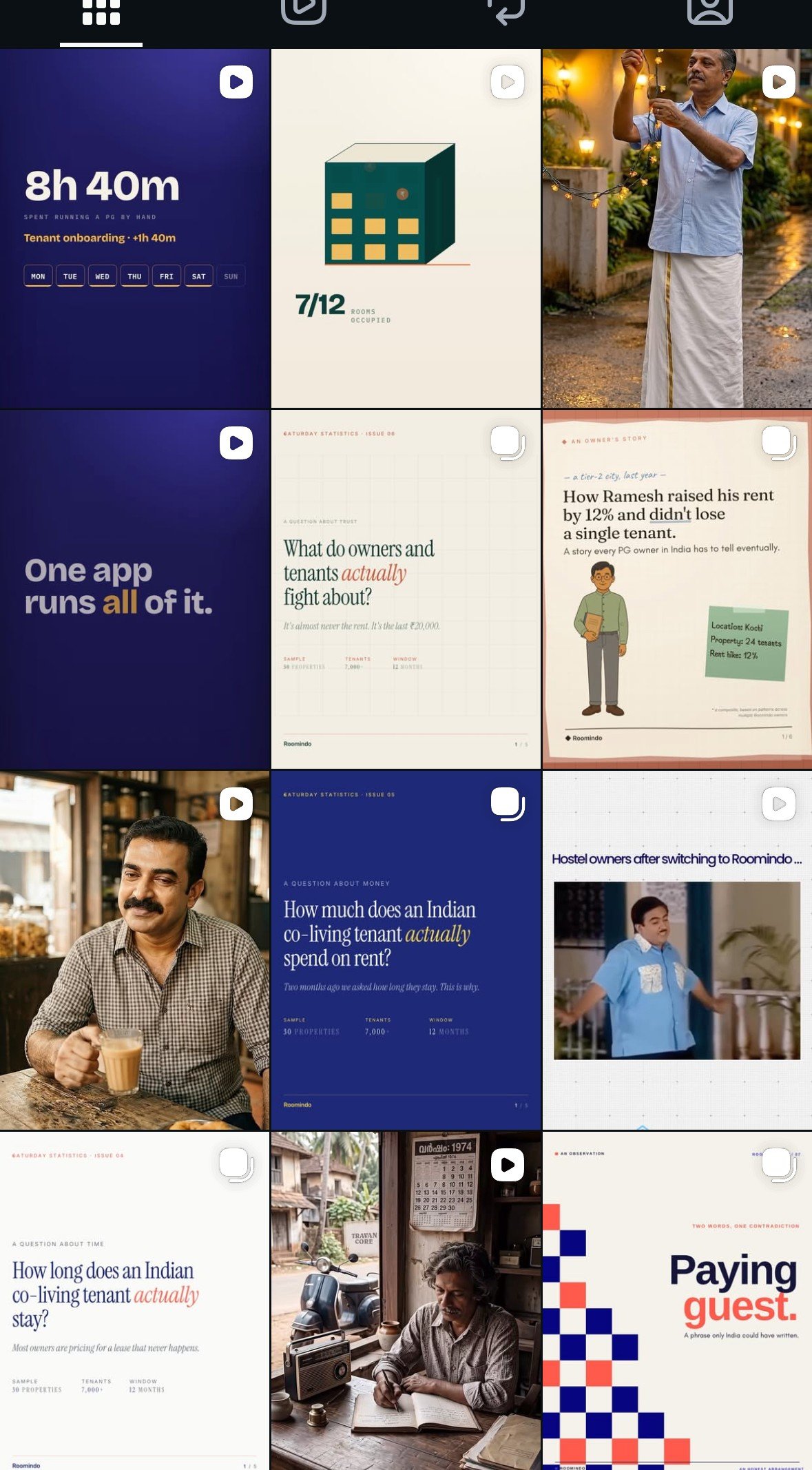
- Saturday StatisticsA recurring data-editorial series — “How long does an Indian co-living tenant actually stay?” Real questions, answered from Roomindo's own data. It positions the brand as the one that understands the business, not just the one selling a tool for it.
- Named truths“Paying guest — a phrase only India could have written.” “Two years. No posts. A lot of property.” Lines that say what the industry knows and never prints.
- Owner's stories“How Ramesh raised his rent 12% and didn't lose a single tenant.” The product taught through a peer's story, not a feature list.
- RestraintSerif headlines, generous white space, a palette that looks like a business journal. The design signals seriousness — deliberately the opposite register to the consumer work.
The rebuilt feed
Editorial · data · restraint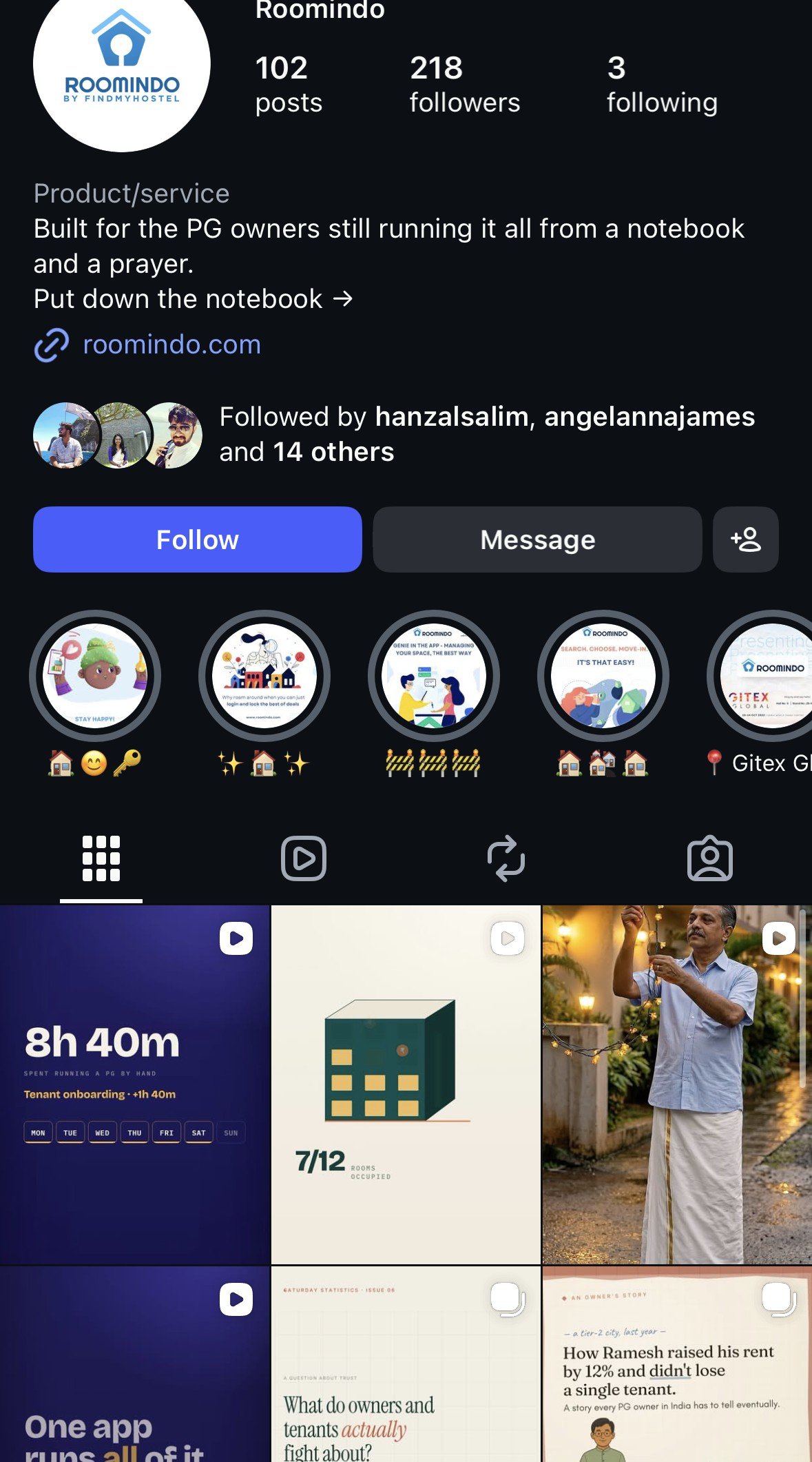
Amaana's strengths sit further upstream than most people expect. Her brand decks are the clearest articulation of direction we've had — the kind of document you can hand to a partner or a client and have them understand the business immediately. For Roomindo in particular, that clarity has translated into how we go to market and who we're able to bring on board.Hanzal Salim
Chief Operating Officer, Bodhwi Technologies
The starting line
First 45 days · owned account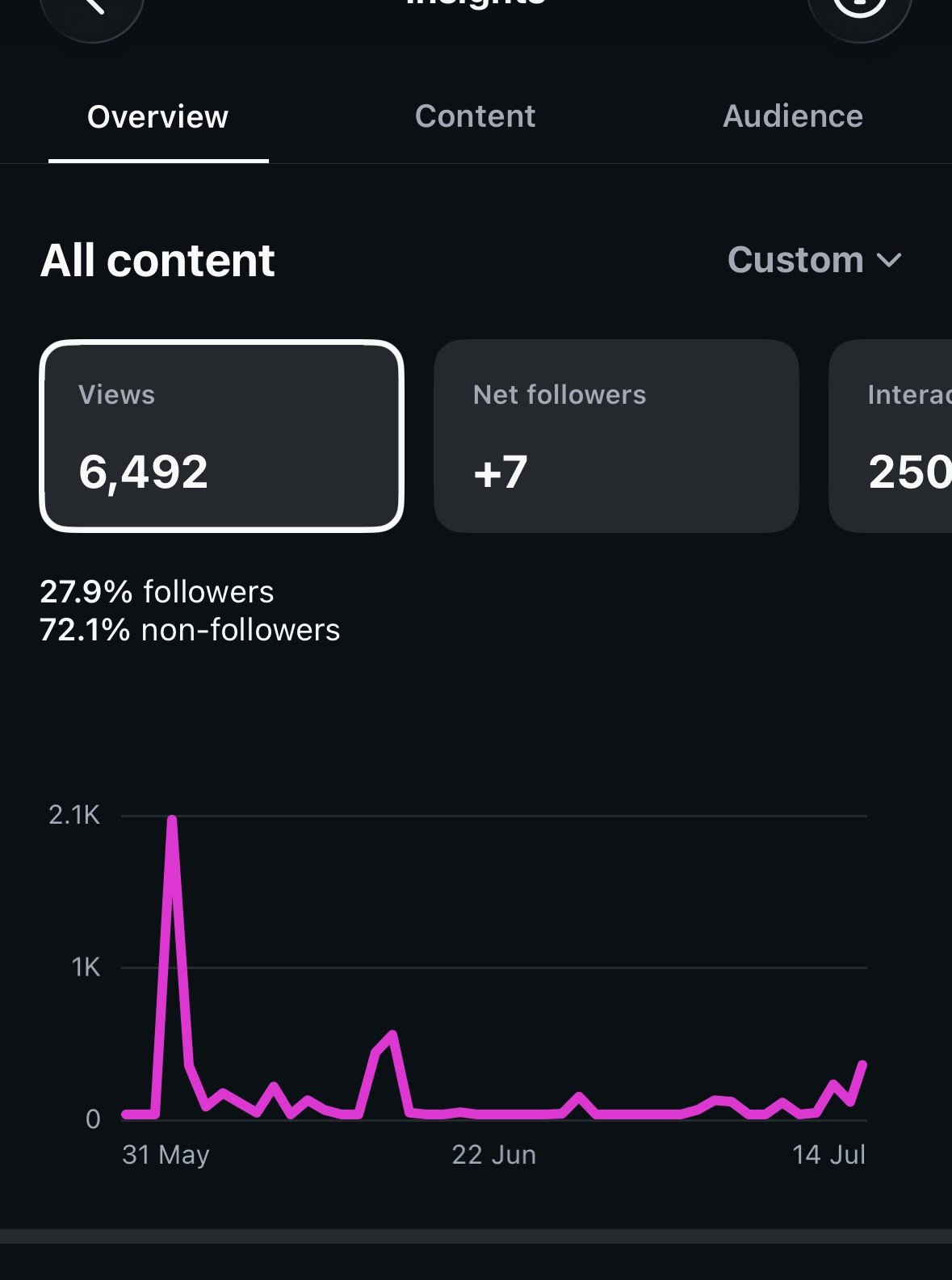
non-followers
content type
views
The audience is small. What the early data shows is that nearly three-quarters of reach comes from people who don’t yet follow — the account is finding new owners, not just talking to the ones it has. For a B2B rebuild six weeks in, that’s the signal that matters.